
Platinum vs White Gold: Which Metal Is Right for Your Ring?
Side by side in a showroom cabinet, platinum and white gold can look almost identical, both bright, both silvery-white, both stunning behind a...
Armadale (03) 7019 8100
Brighton (03) 9593 2197
Canterbury (03) 9830 5600

Make an Appointment
Brighton (03) 9593 2197 | Canterbury (03) 9830 5600

If you’re spending five figures on a diamond, you want to know it’ll actually sparkle. Not just look good on paper with a GIA certificate, but perform in real light, on a real hand, in real life.
That’s where the ASET vs Ideal-Scope debate comes in. These are the two most widely used tools for assessing diamond light performance, and they’re fundamentally different in what they reveal. One provides nuanced, colour-coded data across three lighting angles. The other offers brutal simplicity: pass or fail.
Holloway Diamonds has a unique perspective on this comparison. Our founder, Garry Holloway, invented the Ideal-Scope and was independently developing the principles behind angular light-performance assessment at the same time as Al Gilbertson in the United States. Both tools were created to solve the same fundamental problem: a diamond grading certificate alone cannot tell you exactly how a diamond will perform with light.
But here’s what most jewellers won’t tell you: you don’t necessarily need the more complex tool to make the right decision.

The ASET (Angular Spectrum Evaluation Tool) scope doesn’t just show if light returns, it shows where that light is coming from and how intensely.
When you place a diamond under an ASET scope, you see a colour-coded map:
This is the sweet spot. Light entering from directly above you, where most light comes from — the brightest, most valuable light for brilliance. More red means more punch.
Lower-angle light from the periphery and windows. Less intense than red, but still contributing. Green direction light adds balance and can enhance fire in certain cuts.
Obstruction. When you look at a diamond, your head and body block light, creating contrast. Blue isn’t bad; it’s essential for contrast and scintillation, those sharp flashes when you move your hand.
Backlighting the diamond shows that no light can be reflected from certain parts of it. It’s wasted light escaping through the pavilion instead of reflecting in your eye.
The ASET concept was concurrently discovered by Garry Holloway and Al Gilbertson in the USA. In 2005, the American Gem Society (AGS) based its performance-based grading system on the tool, naming it the Angular Spectrum Evaluation Tool (ASET) — a three-dimensional analysis that actually measures all 58 facets, not just 17 like traditional GIA cut grading. Our founder, Garry Holloway, manufactures the ASET scope for the AGS.
Two diamonds with identical depth percentages and table sizes can perform completely differently. ASET reveals those differences by mapping how each facet interacts with light at different angles. It’s the closest thing we have to predicting real-world performance from a static image.
The ASET scope comes in Garry’s handheld (ASET 30, simulating 30° of head obstruction) and digital ray-traced versions produced by a 3D scan of the diamond’s facets. Professional vendors use these setups for consistent, high-quality images — the ones you’ll see alongside $20,000 cushion and emerald cuts.

Ideal-Scope is elegantly simple. It’s a hot pink red reflector cone and a viewing lens. That’s it.
When you look at a diamond through an Ideal-Scope:
Light returns effectively to your eye. Darker red = more intense return. This is what creates brilliance — the light shining on the diamond, returning to your eyes as intense sparkles.
From your head and body. Black arrows and triangles create contrasting patterning that moves across the diamond and is critical for scintillation. A diamond that’s entirely red looks flat.
Windows where light escapes rather than bounces back. This is your red flag.
Garry Holloway invented the Ideal-Scope in 1986 as a portable version of Okuda’s Fire Scope (a desktop-only device from the 1970s). It’s the perfect rejection tool — something professionals (and consumers) can use to quickly eliminate poor performers from diamond parcels.
And that’s still its best use: binary decision-making. Does this diamond return light effectively? Yes or no. Are there major leakage issues? Yes or no. Are there ugly, persistent dark zones like bow ties in oval, marquise, and pear shape diamonds?
The Ideal-Scope includes a 10x magnifying lens, so you can see the diamond at scale. With practice, you can read optical symmetry from the same arrow patterns shown through a hearts & arrows scope and assess whether proportions are sound based on how evenly light returns across the stone. Unlike the H&A scope, the Ideal-Scope gives the added benefit of clearly indicating light leakage.
Ideal-Scope is intuitive. Show someone a saturated red image with sharp black arrows, and they instantly understand that’s good. Show them a washed-out pink image with white splotches, and they know it’s bad. You don’t need gemological training to interpret the basics.

Let’s be direct about what each tool actually does better.
Ideal-Scope is sufficient. Rounds are mathematically predictable — an Ideal-Scope image will confirm the proportions are sound without the need to understand the complex relationships between table size, crown and pavilion angles. You’ll see strong red saturation, minimal leakage, and balanced contrast.
ASET provides additional data, but for a well-cut round, it confirms what Ideal-Scope already showed because a well-polished round shows little or no green. If you’re choosing between two rounds with similar Ideal-Scope images, ASET can be the tiebreaker (showing which has more precise symmetry), but it’s rarely necessary, as any leakage in the Ideal-Scope will appear through both.
ASET is superior. Fancy shapes (princess, cushion, emerald, radiant, oval, pear) are far more complex. Their pavilion angles vary across the stone, and their facet structures don’t follow the consistent angles all the way around the 58-facet brilliant formula. An Ideal-Scope image of a fancy shape often shows uniform red saturation, which looks perfect, but misses critical detail.
ASET reveals what’s actually happening: where light angles are optimal (red), where they’re acceptable (green), and where contrast is positioned (blue). For an oval or a cushion cut with mostly green under the table, ASET will map it clearly. Ideal-Scope might show it as solid red.
Ideal-Scope wins. Any buyer can assess an Ideal-Scope image in 10 seconds. Red is good, white is bad, check for symmetry, done. ASET requires more interpretation. You’re reading three colours, assessing distribution, looking for balanced green, and checking that blue forms symmetrical patterns. It’s not complicated, but it requires some practice and is slower.
ASET wins. It’s providing granular data that Ideal-Scope simply can’t capture. The distinction between 45° and 75° lighting angles matters, especially for fire and scintillation. ASET shows this; Ideal-Scope collapses it into “red.”
Most jewellers don’t use either because almost all their diamonds would fail. But if you’re buying online from performance-focused vendors, ASET images are standard for anything over $10,000. Ideal-Scope is more common as a handheld tool for in-person inspections.
ASET is non-negotiable in three scenarios:
If you’re buying anything other than a round brilliant, demand ASET. Cushions, radiants, emeralds, ovals — all of them have complex light behaviour that Ideal-Scope can’t adequately map. A cushion with a “crushed ice” facet pattern might show perfect red saturation in Ideal-Scope but reveal uneven light distribution in ASET. That unevenness translates to inconsistent sparkle in real wear.
When you’re spending $30,000+ on a 2-carat stone, you want every available data point. ASET provides insights that directly impact real-world performance: the intensity of brilliance, the quality of fire (how coloured flashes disperse), and the balance of contrast for scintillation. At this price point, you’re buying measurable light performance. ASET quantifies it.
You’ve narrowed it to two cushions. Both have excellent Ideal-Scope images, score HCA under 2.0, and look great in videos. ASET reveals which has more dominant red, better green distribution, and cleaner contrast patterning. This is the tiebreaker data that separates good from exceptional.
Ideal-Scope is sufficient, and often preferable, when:
If you’re purchasing a 1-carat round with a crown angle of 34.5°, pavilion angle of 40.8°, table of 57%, and an Ideal-Scope image showing saturated red with minimal white leakage, ASET won’t add actionable information.
The round brilliant is the most studied, most predictable diamond shape. When the proportions are in the ideal range, diamond light performance is consistent. Ideal-Scope confirms it. Move forward.
If you’re inspecting a diamond in a retail store or at a jeweller, bring a handheld Ideal-Scope (they cost $25–65). It’s portable, fast, and requires minimal setup. You can assess five diamonds in two minutes. Get them from Ideal-scope.com.
ASET scopes exist in handheld form, also available at Ideal-scope.com for $50.
For stones under $5,000, Ideal-Scope provides sufficient quality control. You’re primarily screening for problems — light leakage, poor symmetry, and obvious cut deficiencies. Ideal-Scope does this efficiently.
ASET’s granular data becomes most valuable at higher price points, where you’re optimising for excellence rather than screening for flaws.
This is what Ideal-Scope was designed for: elimination. You’re looking at 10 stones. Eight show significant white leakage or washed-out pink — rejected. Two show strong red saturation — shortlisted.
Ideal-Scope excels at binary decisions. It’s the fastest way to separate contenders from pretenders.
Here’s the part most diamond guides skip:
ASET and Ideal-Scope both measure light return and leakage. But diamond light performance is three-dimensional: brilliance (white light return), fire (coloured light dispersion), and scintillation (sparkle and contrast).
ASET maps brilliance and shows where contrast forms (blue zones for scintillation). Ideal-Scope confirms brilliance and reveals basic contrast patterning. But neither directly measures fire — the rainbow flashes you see when a diamond moves.
Fire is primarily determined by crown angles and how facets disperse light into spectral colours. A diamond with perfect ASET or Ideal-Scope images but a shallow crown (under 32°) will have weak fire.
This is why scope images can be used alongside numerical data: crown angle, pavilion angle, depth percentage, and table size. The proportions predict fire potential. The scope images confirm brilliance and contrast.
Walk into a typical chain jeweller. Ask to see their diamonds under an Ideal-Scope. Watch them politely decline or claim they “don’t need specialised tools.”
Here’s why: the majority of the inventory would show concerning light leakage or poor contrast. These are stones with pavilion angles too steep (41.2°+), resulting in windows of lost light, or too shallow (40.0°), with a dark appearance on very close-up observation.
Retailers rely on super bright lighting, marketing, and the fact that most buyers have no performance baseline. If customers saw scope images comparing their $8,000 diamond to a true super-ideal cut, they’d understand the difference immediately.
Super-ideal diamonds (those that score AGS 0 for light performance or HCA under 2.0) represent less than 5% of polished stones. They take 3–4x longer to cut. They command premium prices. Mass-market jewellers can’t stock them profitably. So they don’t. And they certainly don’t use tools that would expose it.
At the high end, ASET images are occasionally manipulated. The facets might be cleaned up digitally, colours intensified, symmetry perfected.
How to spot it: compare the ASET image to actual photographs and videos of the same diamond. Do the facet patterns align? Are there imperfections visible in the photos that mysteriously disappear in the ASET? That’s your warning.
Reputable vendors for designer jewellery in Melbourne don’t need to Photoshop because their stones are genuinely well-cut. Be cautious if you’re buying from an unknown seller offering “perfect” ASET images at below-market pricing.
A diamond viewed through ASET or Ideal-Scope will look different depending on the backlighting intensity. Too much light, and leakage areas wash out (appearing less severe than they are). Too little light, and everything looks dark.
Professional vendors use standardised lighting setups, ASET with controlled backlight, or ideal-light devices for Ideal-Scope. Handheld images taken by consumers with a desk lamp behind a piece of paper? Inconsistent.
If you’re buying based on vendor-provided scope images, make sure they’re professionally captured. If you’re using a handheld scope yourself, understand that your image might look different from what the vendor shows, and that’s okay, as long as you’re comparing consistently lit images.
Let’s bring it back to what actually matters: brilliance, fire, scintillation.
You’re not buying an ASET image. You’re buying a diamond that performs in boardrooms, outdoor weddings, and office lighting. The scope images are predictive tools, not the end goal. Here’s how to use them properly:
Use the Holloway Cut Adviser (HCA) tool as a rough filter for round brilliant cuts: scores under 2.0 are worth reviewing, and over 2.0 can be rejected. It’s not definitive, but it eliminates obvious poor performers.
For rounds, either is fine. For fancy shapes, insist on ASET. If the vendor can’t or won’t provide scope images, walk away. There’s no legitimate reason to hide this data, unless the diamond’s light performance is poor.
A round with strong Ideal-Scope saturation (dark red, minimal white, sharp black arrows) is excellent. For a fancy shape, look for ASET showing dominant red (40–60% of the stone), balanced green (20–30%), symmetrical blue contrast (15–30%), and minimal white leakage. If you see significant white or washed-out zones, or unbalanced blue patterns, reject it.
Scope images predict performance; they don’t replace visual confirmation. Watch videos in different lighting. Ask for outdoor shots (but not in direct sunlight), not just studio setups with perfect spotlights. A diamond that performs well in scope images should look sharp, bright, and contrasty in real light. If the videos look dull or lifeless despite perfect scope images, something’s off.
“Hearts and Arrows” branding doesn’t guarantee light performance. Ideal-Scope and ASET images do. “GIA Triple Excellent” doesn’t mean super-ideal; it means the diamond met bare minimum thresholds across three categories. Ideal-Scope will result in a 90% rejection rate. Use the tools. Don’t rely on words.
It’s faster, simpler, and reveals the same light leakage issues that matter most. If the proportions are in the ideal range and the Ideal-Scope image is clean, you’re done.
The complexity of non-round cuts demands angle-specific light analysis. Don’t compromise on this.
Use Ideal-Scope for quick assessment, ASET for precision. You’re investing serious money, so maximise your data.
If you’re shopping somewhere that refuses to provide scope images or claims they’re “unnecessary,” you’re being sold a performance-compromised stone.
This debate isn’t about one being categorically “better.” It’s about using the right tool for the job.

Visit the Holloway Diamonds showroom and speak with one of our diamond specialists. We’ll show you Ideal-Scope and ASET images side-by-side, explain what you’re looking at, and make sure you’re buying measurable light performance.
For bespoke designs, including Melbourne custom jewellery and rare coloured stones such as argyle pink diamond engagement rings, we assess every stone using both tools before it’s set.
Because at this price point, you deserve to know exactly what you’re buying.
Side by side in a showroom cabinet, platinum and white gold can look almost identical, both bright, both silvery-white, both stunning behind a...
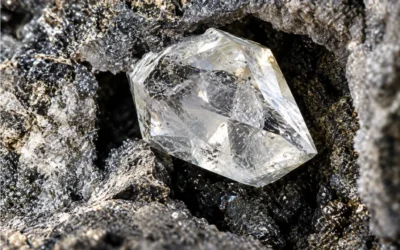
Every diamond on display in our showrooms started its journey roughly 150 to 200 kilometres beneath the Earth's crust, billions of years before any...
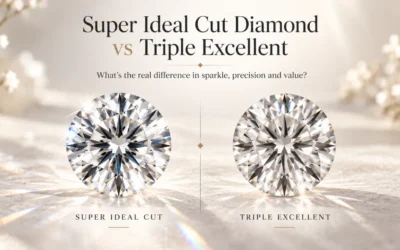
If you're spending five figures on a diamond, you want to know it'll actually sparkle. Not just look good on paper with a GIA certificate, but...