10 Most Popular Engagement Ring Styles in Australia
Picking an engagement ring is one of the most exciting (and nerve-wracking) decisions you'll ever make. With so many...
Armadale (03) 7019 8100
Brighton (03) 9593 2197
Canterbury (03) 9830 5600

Make an Appointment
Brighton (03) 9593 2197 | Canterbury (03) 9830 5600

Updated February 2026
The Gemological Institute of America (GIA) is the most reliable diamond laboratory and by far the largest of several global labs. GIA certified diamonds are supposed to ensure quality and protect consumers when purchasing high-value items like engagement rings and diamond rings.
However, there’s a fundamental conflict of interest: GIA’s clients are the dealers who submit diamonds for certification and grading, not you, the customer. In our opinion, GIA favours their clients – diamond cutters and diamond dealers – while claiming to protect consumers.
As Garry Holloway highlighted in his recent article for Jeweller Magazine’s “Great Diamond Debate III,” the natural diamond industry must “clean its own house” before worrying about competition from lab-grown diamonds. The key to consumer confidence starts with honest, transparent diamond grading reports.
You need to know how to choose a beautiful diamond for your engagement ring or when remodelling jewellery with family heirloom stones.
This is the most deceptive practice in diamond grading today.
GIA grading certificates use confusing terminology like: “Clarity Grade is based on Clouds that are not shown” or “Clarity Grade is based on Internal Graining that are not shown.”
What this actually means: The stone is hazy, milky, or lacks brilliance and sparkle. These GIA certified diamonds are dull.
They have microscopic inclusions reducing the diamond’s sparkle and transparency. Very few jewellery shop owners understand this. Many offer these diamonds as a “bargain” because you cannot see any flaws with a jeweller’s 10x loupe.
The wholesale trade sells these dull-looking diamonds at a 20-30% discount.
However, many online and brick-and-mortar retailers present them as “lucky finds” with fewer visible inclusions than expected for their clarity grade.
Recent data reveals the extent of this issue. On October 21, 2024, analysis of RapNet (the diamond industry’s B2B trading platform) showed:
Indian manufacturers use a drop-down menu to self-report milky grades (none, light, medium, heavy) to maintain trust with regular clients. They show more integrity than many wholesalers further down the diamond pipeline who remove this critical information before selling to consumers.
In this 2025 article, Garry Holloway examined a specific diamond:
The Problem: None of this transparency information appeared on the GIA certificate. The seller’s online video made it look brilliant, but high-definition examination revealed a dull, hazy stone.
A consumer buying this diamond has no warning that it lacks sparkle – the most important quality in any diamond, whether for classic diamond rings or coloured diamonds, including pink engagement rings.
The Solution: GIA should add a transparency grade to their reports. This would prevent unscrupulous sellers from taking advantage of consumers and would immediately reduce the polishing of dull, milky diamonds.
GIA Cut Quality grades are far too generous to diamond dealers who pay for the grading. Garry Holloway rejects 90% of GIA’s top Cut Quality round diamonds – those with Triple Excellent or XXX cut grades.
Compare a Holloway diamond to a XXX triple-excellent-grade diamond, and you will see for yourself. All Holloway Diamonds will out-sparkle 90% of GIA XXX triple excellent grade diamonds.
The GIA itself states that the maximum depth for an “Excellent” cut grade is 63.0% of a diamond’s average diameter.
Yet in 2019, there were 37,000 diamonds on RapNet with depths from 63.1% to 65.0% that still received GIA Excellent cut grades. When Garry “blew the whistle” on this in Rapaport Diamond Magazine, GIA defended the practice with a convoluted explanation about “estimating” total depth.
The situation has gotten worse: As of September 21, 2025, there are now 47,767 GIA Excellent cut quality round brilliants with depths from 63.1% to 64.3% listed on RapNet. This represents 7.3% of all GIA Excellent cut diamonds.
The example diamond mentioned earlier (63.4% depth) scores 5.0 on the Holloway Cut Adviser (HCA). The best cut diamonds score below 2.0, and the worst score 10.
The chart below shows red Ideal-Scope images across the proportions that GIA gives Triple Excellent or XXX – its top Cut Quality grade. The diamonds with proportions to the upper right all have less light return and brilliance. The pale circles are zones of light leakage out the back of the diamond. Only 10% of GIA XXX diamonds fall below the line. Diamond cutters cut 90% of diamonds too deeply.
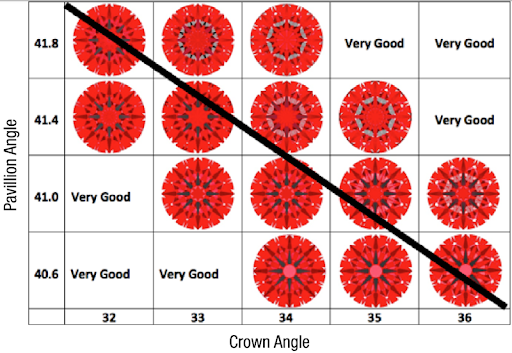
GIA triple excellent XXX proportion diamonds are mostly bad. See Ideal-Scope for details.
GIA does not grade the Cut Quality of fancy shaped diamonds – no oval cut, cushion cut, emerald cut, Asscher cut, marquise, or pear-shaped diamond cuts receive cut grades.
Very few jewellers and almost no jewellery store salespeople know this. “Excellent Polish” and “Excellent Symmetry” on a GIA grading certificate does NOT mean the stone is well-cut.
Garry Holloway rejects 95% of all fancy shapes. He invented tools to select the very best fancy shaped diamonds – the ASET scope and Ideal-Scope. The world’s best diamond cutters use these inventions to produce the sparkliest diamonds.
In the absence of GIA cut quality grading for fancy shapes, there’s a “Wild West” opportunity for diamond cutters. They’re free to produce diamonds that achieve high carat weight yield from rough diamonds while delivering poor brilliance.
Compare these two GIA certificates:
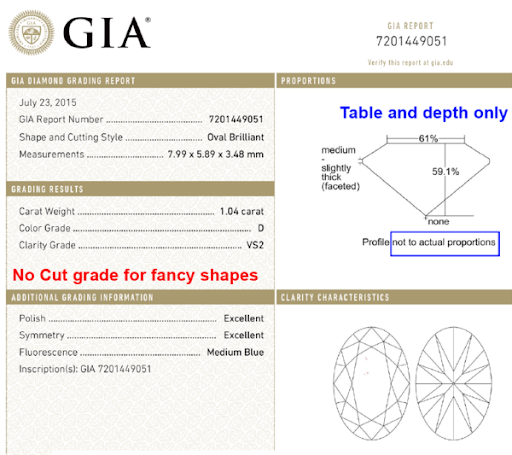
GIA oval cut grade
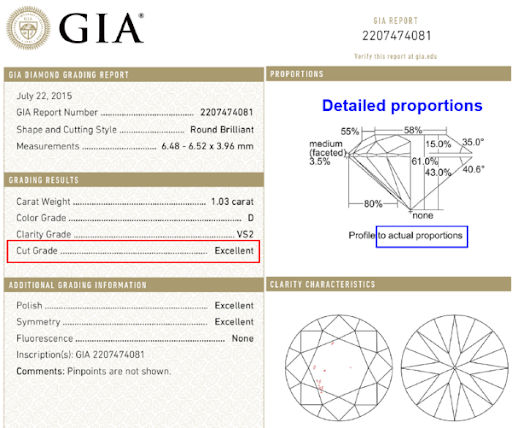
GIA triple excellent XXX diamond
This matters whether you’re buying an oval for an engagement ring or selecting stones at a high end jewellery store in Melbourne.
It costs more for GIA to grade and certify a diamond than the actual cost of cutting the diamond! The grading process sometimes takes months, and all these costs add to the final price you pay.
An example of duplicity: GIA provides free laser inscriptions on diamonds under 1.00 carat but charges for inscribing report numbers on larger diamonds.
The reason? So they can identify diamonds that dealers have resubmitted hoping for a better grade! For diamonds larger than one carat, GIA creates a digital plot or map of inclusions to identify resubmitted stones.
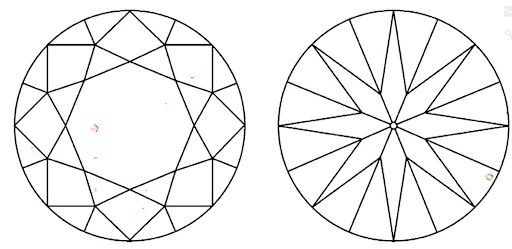
A GIA diamond clarity characteristics plot of inclusions
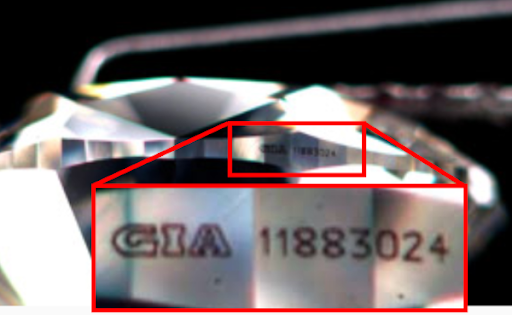
GIA laser inscription
This is a problem consumers don’t even know exists.
The GIA developed the D-Z colour grading system in the 1950s, grading colour through the pavilion (upside down).
However, the face-up colour of poorly cut diamonds can be substantially more apparent than the upside-down colour grade. Larger diamonds also often face up lower in colour than their assigned grade.
Consumers want to know the colour they’ll see when the diamond is set in jewellery, not what it looks like upside down!
Today, GIA uses digital colourimeters (colour-measuring instruments) to grade almost all diamonds. These instruments are designed to grade pavilion colour. Designing an instrument for face-up colour grading should not be a problem.
Adding a face-up colour grade would create a commercial incentive for cutters to produce better fancy shaped diamonds. Better light return means whiter face-up colour, so cutters could sell better-looking diamonds for higher prices.
This would naturally improve cut quality across the industry without requiring GIA to create complex cut grading systems for each fancy shape.
As detailed in Garry Holloway‘s 2024 book “How To Select The Best Diamonds,” and his recent article, the solutions are clear:
Prevent sellers from hiding milky, hazy diamonds behind vague “clouds not shown” comments.
Stop grading diamonds deeper than 63% as “Excellent” cut quality.
Give consumers the information they actually need – what colour the diamond appears when set.
Either develop cut grades or provide transparency and face-up colour grades to drive quality improvement.
GIA is the best of a variable bunch. Despite GIA’s issues and shortcomings, GIA remains indispensable. Almost all larger Holloway diamonds come with a GIA grading report.
GIA does important work. Their diamond grading and certification profits fund education and research. When they grade a diamond, they use high-tech equipment to verify it’s a natural diamond and detect synthetic lab-grown diamonds and treatments.
However, as Garry Holloway argues, the natural diamond industry must “clean its own house first.” Lab-grown diamonds are here to stay. Bashing the competition won’t work.
Consumer confidence in natural diamonds depends on honest, transparent grading reports.
The GIA has the capability and responsibility to implement these changes. If they do, consumers and honourable retailers will demand natural diamonds with GIA reports, forcing other labs to adopt similar standards.
When purchasing diamond pieces such as real diamond tennis necklaces or a real diamond tennis bracelet, you deserve complete transparency about your diamond’s quality.
At Holloway Diamonds, we reject 90-95% of GIA certified diamonds to find the truly exceptional stones that deliver the brilliance and sparkle you deserve. That’s why our diamonds consistently outperform the competition – and why our clients never settle for ordinary.
When you invest in a diamond, shouldn’t it be one that actually sparkles?
Picking an engagement ring is one of the most exciting (and nerve-wracking) decisions you'll ever make. With so many...
Buying a diamond is a significant investment, especially in Melbourne, where the jewellery market offers everything...
Pink engagement rings have a distinct presence – delicate, expressive, and incredibly rare. At Holloway Diamonds, we...